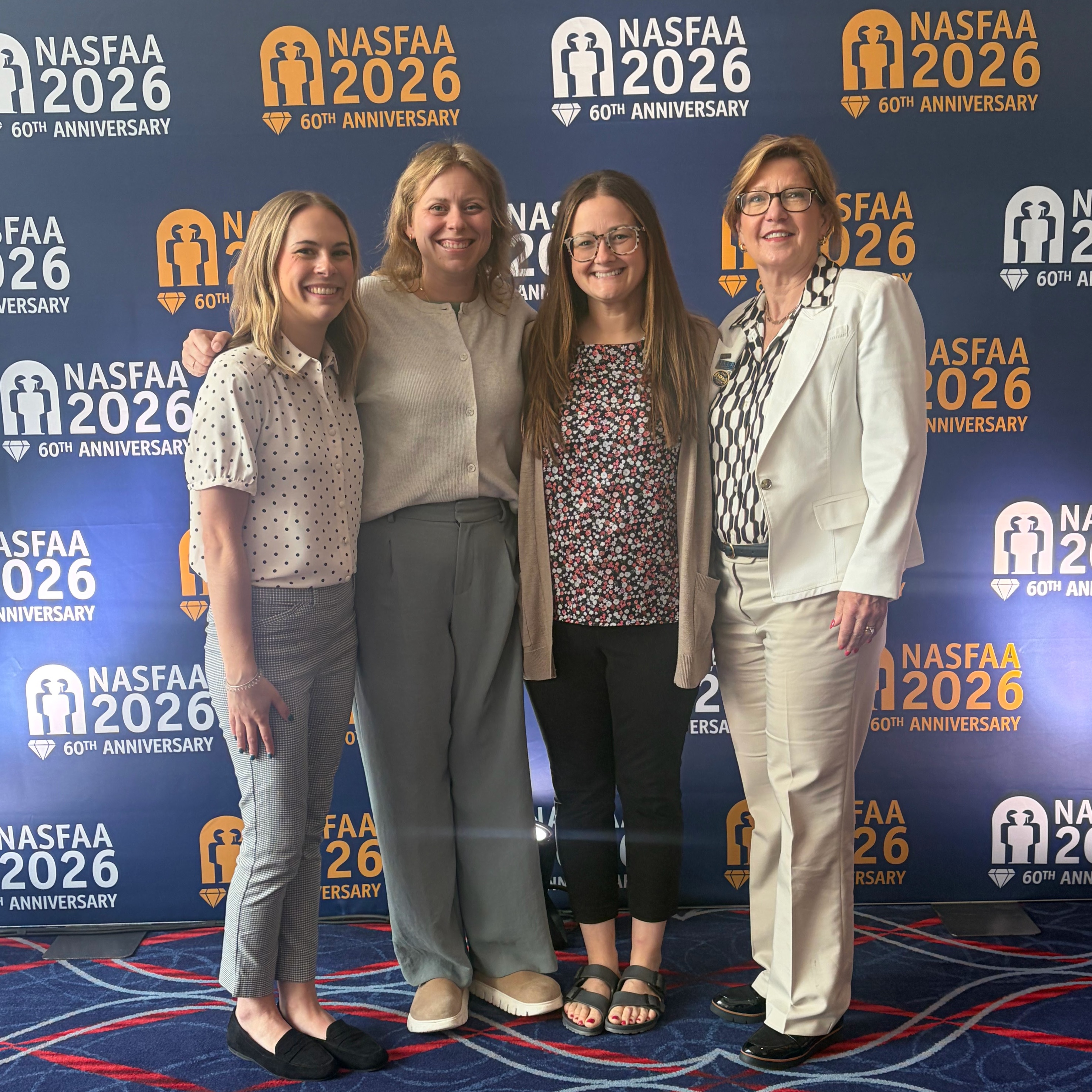
During one of the most significant periods of federal financial aid change in recent history, four professionals from the University of Iowa Office of Student Financial Aid represented the university at the 2026 National Association of Student Financial Aid Administrators (NASFAA) National Conference. The conference, which marked NASFAA's 60th anniversary, drew nearly 2,500 financial aid professionals from colleges, universities, state agencies, and the U.S. Department of Education. Two University of Iowa staff members were selected to present nationally, and the conference also marked a rare leadership transition as one Iowa staff member succeeded another as president of the Iowa Association of Student Financial Aid Administrators (IASFAA).
Financial aid touches nearly every part of the university's operations, including enrollment management, billing, academic advising, information technology, student success, and institutional planning. This year's conference featured presentations from U.S. Department of Education leadership, including the Under Secretary of Education, giving attendees direct insight into how new federal requirements will reach campus. Those insights help the Office of Student Financial Aid anticipate change, prepare proactively for new federal requirements, and support informed decision making across the university.
That responsiveness is strengthened by the office's close partnership with the university's MAUI team, which develops and maintains Iowa's homegrown student information system. The partnership enables the university to adapt its systems quickly as federal requirements evolve, reducing implementation timelines and supporting timely service for students and campus partners.
Iowa on the National Stage
Brenda Buzynski, Assistant Provost and Director of Student Financial Aid, was selected to present Data Sharing in Action: Collaboration and Compliance, a national panel on how institutions share FAFSA and federal tax information while keeping pace with evolving federal guidance. Buzynski works closely with university leadership to assess the institutional impact of federal policy shifts and keep the office aligned with both regulatory requirements and Iowa's enrollment priorities.
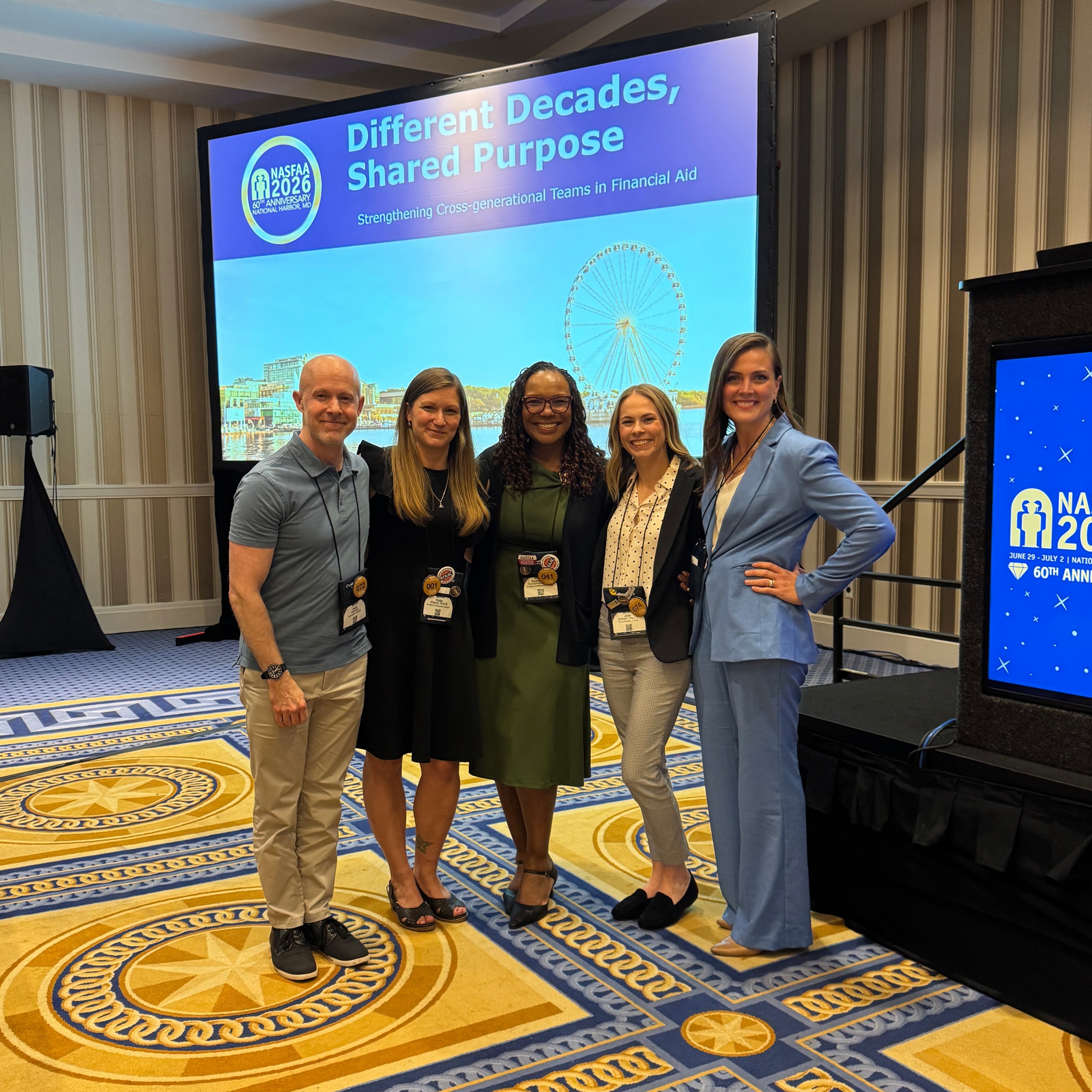
Jess Graham, Assistant Director of Service Operations & Outreach, joined colleagues from across the Midwest to lead Different Decades, Shared Purpose: Strengthening Cross-Generational Teams in Financial Aid. On campus, Graham helps prospective students, families, and campus partners navigate the effects of OB3 and the new loan provisions. Her national profile is growing beyond the conference stage as well: this year she was also selected as a NASFAA U instructor, helping train financial aid professionals across the country.
Together, their presentations shared University of Iowa expertise with financial aid professionals from across the country on topics ranging from federal compliance to organizational leadership.
Kelsey Ryder, Senior Associate Director of Advising & Office Operations, attended while completing her term as President of IASFAA. At Iowa, Ryder leads advising and office operations through one of the most demanding regulatory periods in recent memory, running weekly staff briefings to keep OSFA staff current and coordinating with IT to translate new policy into working systems.
Lacey Patterson, Assistant Director of Study Abroad & External Programs, attended to strengthen the university's partnerships supporting graduate, professional, and study abroad populations. She serves as the office's liaison on how evolving federal policy affects these specialized student groups.
A Leadership Handoff, Not a Coincidence
One of the clearest signs of Iowa's standing in the profession happened during the conference itself: IASFAA's presidency passed directly from one University of Iowa staff member to another, as Kelsey Ryder concluded her term and Jess Graham was installed as the new president. The transition reflects the university's longstanding commitment to developing leaders who contribute to the profession beyond the University of Iowa.
"I found myself feeling incredibly grateful to be part of a profession and a community that is so much bigger than my own institution," Graham said.
Buzynski echoed the sentiment: "Learning from peers is invaluable. It was great to collaborate with colleagues, and one thing was clear — no one has all the answers."
Those conversations also reinforced the value of the University of Iowa's long-standing investment in collaboration across financial aid operations, technology, and campus partnerships. Discussions with colleagues from across the country affirmed that Iowa's collaborative approach has positioned the university to respond thoughtfully and efficiently to significant federal change. Partnerships between the Office of Student Financial Aid, the university's MAUI team, and campus stakeholders have enabled the university to implement complex federal requirements while continuing to provide timely, student-centered service.
The Bigger Picture
The Office of Student Financial Aid's national engagement is about more than attending a conference. It reflects the university's commitment to remaining at the forefront of a rapidly evolving federal landscape through collaboration, innovation, and professional leadership.
As financial aid policy continues to change, the University of Iowa's collaborative model brings together operational expertise, technology, campus partnerships, and national engagement. Together, these strengths position the University of Iowa to respond confidently to federal change while contributing expertise that advances the financial aid profession and strengthens service to students, families, and campus partners.